
Product guidance
How to Use Deterministic Seeds for Consistent User Avatars
Learn how deterministic avatar generation uses seeds for consistent visuals and how public-avatar detection supports contact-data review.
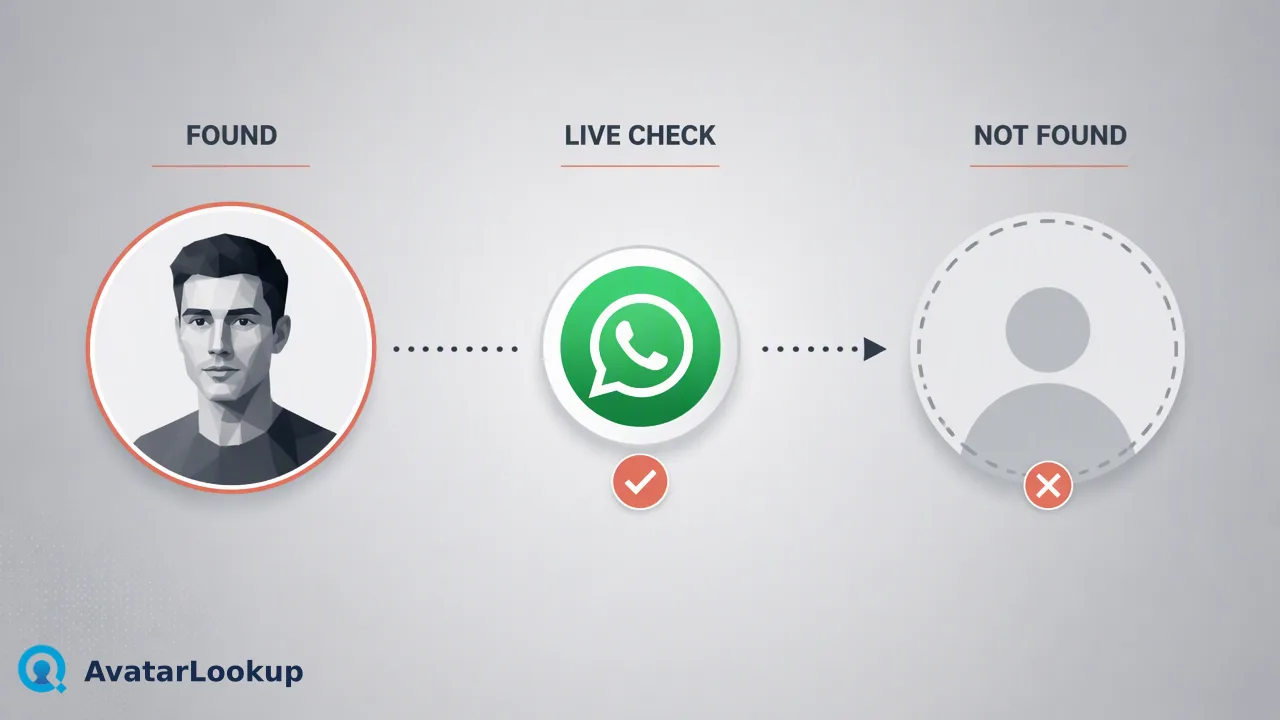
Learn how deterministic avatar generation leverages stable seeds to render consistent visual profile representations without image storage, and how public-avatar signals support contact data workflows.
Deterministic avatar generation uses a stable, unique identifier—such as an internal user ID or cryptographic email hash—as an algorithmic seed to produce a consistent visual representation. By calculating visual assets directly from this seed rather than relying on manual file uploads or static media storage, systems generate identical profile imagery across varied sessions and client interfaces. This procedural method minimizes cognitive friction during user record reviews, avoids database image hosting overhead, and maintains interface coherence across touchpoints.
The Role of Consistency in Digital Identity
Maintaining consistent visual representations across disparate applications supports rapid record recognition and reduces cognitive friction in administrative workflows. In systems handling multi-channel contact records, internal teams frequently switch between databases, support portals, and communication interfaces. When records lack profile markers or display disjointed placeholder graphics, reviewers must depend entirely on raw text strings, which slows auditing and increases manual review time. A stable visual anchor provides team members with an immediate visual cue that connects interactions across sessions. While user-provided uploads can offer personalization, they frequently introduce missing assets, non-standard dimensions, and broken image URLs. Establishing an automated, deterministic baseline guarantees that every account identifier retains an identifiable presentation pattern, supporting operational clarity across touchpoints without requiring manual profile completion.
Understanding Deterministic Generation
Deterministic generation operates on a predictable mathematical rule: providing the exact same input string—the seed—into a procedural rendering algorithm always yields the identical graphical output. Common inputs include system UUIDs, internal numeric account IDs, or cryptographic hashes (such as SHA-256) of normalized email addresses. The algorithm divides the seed's entropy into distinct components, mapping specific byte segments to visual elements such as background colors, geometric shapes, or structural design layers. Because the visual outcome is mathematically bound to the identifier itself, systems generate avatars on demand without storing binary image files in databases or object storage buckets. If an identifier is queried across disparate services, providing the identical seed regenerates the matching visual asset instantly.
Implementing Stable Avatar Workflows
Scaling deterministic avatar generation in production environments relies on stateless, URL-based delivery architectures. Teams typically format requests using predictable HTTP URL patterns where the unique seed is URL-encoded or pre-hashed directly into the URL path or query string. Web frontends and mobile clients can render these image links dynamically without placing read loads on primary transactional databases. To ensure consistent results across platforms, teams must establish strict normalization rules prior to seed generation, such as trimming whitespace, enforcing lowercase casing on email strings, and standardizing identifier encodings. Furthermore, high-traffic systems can implement edge caching headers, enabling content delivery networks to serve generated SVG or PNG assets directly from edge caches. This architecture reduces compute load while ensuring fast, reliable visual rendering at scale.
Auditing Contact Records with Public-Avatar Detection
While deterministic seeds generate synthetic visual markers, contact-data workflows often require reviewing real-world public account indicators. AvatarLookup serves as a focused public-avatar detection platform for teams reviewing supported account identifiers within contact auditing processes. Public-avatar checks report clear, source-specific operational signals categorized into three distinct outcomes:
| Result Type | Operational Meaning |
|---|---|
| Avatar Available | A public avatar was successfully retrieved for the queried identifier. |
| No Avatar | No public avatar is present; this does not indicate the account does not exist. |
| Undetermined | The lookup could not reach a definitive conclusion; this is not a negative result. |
| Single checks evaluate WhatsApp, Gmail, Yandex, and Mail.ru identifiers. For larger datasets, asynchronous bulk checks support up to 100,000 entries per file (up to 10 MB in CSV, TXT, or XLSX formats) across WhatsApp, Telegram, Viber, LINE, Zalo, MAX, Gmail, Yandex, and Mail.ru. |
FAQ
Why is a deterministic seed preferred over manual image uploads?
Using a deterministic seed removes the operational overhead of hosting, moderating, and serving static image files. It ensures that every record receives an immediate visual marker derived directly from an existing identifier, such as an account ID or email hash, maintaining cross-platform rendering consistency without requiring users to upload assets.
How does avatar consistency support user recognition across platforms?
Avatar consistency provides a dependable visual baseline across distinct dashboards, directories, and communication tools. When contact records retain identical visual markers across systems, administrative and technical teams can scan lists, track interactions, and review accounts more efficiently, reducing cognitive friction during high-volume operational workflows.
What are the limitations of algorithmic appearance estimates?
Appearance attributes such as estimated age ranges, presented gender, hair features, or skin-tone markers are algorithmic estimates derived from an image.
Learn More
Choose the product information that fits the next step in your workflow.